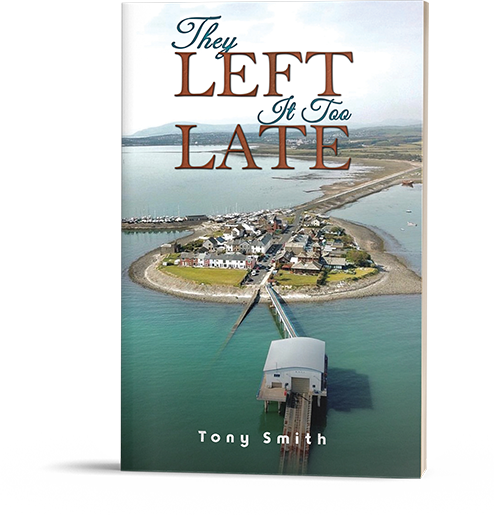
When Fiction Mirrors Life: Alan King’s Touching Review of They Left It Too Late
As a writer, there's nothing more moving than hearing from a reader who not only enjoyed the story but lived aspects of it. Alan King’s review of They Left It Too Late is one I will always treasure—not just because he praised the book, but because he found in it echoes of his own life, love, and memories of a bygone era.
Alan writes:
What a compelling and involving book. Having fallen in love and married in the 1950's I identified with so much of the author's wonderful 'word pictures' of the individuals and the times. We lived on a council estate as part of a mining community and life certainly wasn't easy and was very cold during the winter, something portrayed brilliantly by the Author. I 'recognised' so many elements of the period as, like Justin, I too was struggling to make my way in business. I found myself genuinely caring about him in particular but so many of the other characters too. 'They Left It Too Late' is a thoroughly good read as well as a 'Time Capsule' of the period and the area and I finished it wanting more, always a good sign. Please let Justin be okay!
Reading Alan’s words brought a lump to my throat. To know that Justin’s journey—the ups and downs, the hesitations, the cold winters, the quiet ambition—felt so familiar to someone who lived through the 1950s is an incredible validation of the emotional truth I was hoping to capture. Justin’s world may be fictional, but the roots of his story are grounded in real lives like Alan’s.
What touched me most is that Alan not only saw himself in Justin’s entrepreneurial struggles but also felt emotionally invested in him and the other characters. That’s the highest compliment an author can receive—when readers begin to care deeply about fictional people as if they were real. The final line of his review—“Please let Justin be okay!”—still makes me smile. (I promise, Alan, I’m thinking hard about where to take his story next.)
Alan also called the book a “Time Capsule”—a description that means so much to me. I wanted They Left It Too Late to do more than tell a story; I wanted it to preserve the feel of a place, a community, and a period in British life that is too often simplified or forgotten. The harsh winters, the neighbourly chats, the council estate struggles, and the understated courage of people who carried on despite life’s limitations—these were not just background details, but the very heartbeat of the novel.
That Alan recognised and validated those "word pictures" means I must have painted them with at least some accuracy—and that makes all the research, memory-scanning, and rewriting worthwhile.
Thank you, Alan King, for sharing your story through mine. For readers like you, I’ll keep writing—and yes, I’ll take good care of Justin.
Post Views : 88